

Different cars, increasingly larger tyres, less space inside the wheel arch and a growing demand for simplicity. Over the past sixty years, the evolution of cars has brought new needs and new solutions to the world of snow chains.
König’s history has closely followed these changes since 1966.
How did König begin? And when? Let’s take a step back.
Let’s start with the broader context. Northern Italy, the 1960s. A decade in which both the number of cars on the road and the number of skiers, amateur and professional, began to grow.
Now let’s focus on the local area. The city of Lecco and its steelmaking district. A region with heavy snowfall that soon became fertile ground for developing solutions to meet people’s needs: travelling safely on roads covered with snow and ice. Winter tyres did not yet exist, and heavy snowfall made driving difficult. This is where the König story began.
The 1960s and 1970s: from the first chains to the diamond-pattern tread
Following its foundation in 1966, König began producing snow chains with a ladder-pattern tread. This type of product features a series of segments positioned perpendicular to the direction of travel, similar to the rungs of a ladder, which lie transversely across the tyre and provide intermittent grip.
Although ladder-pattern chains provided good traction on slippery surfaces, they could not ensure easy directional control along different trajectories, when cornering or on lateral slopes, such as those typically found on mountain hairpin bends.
To improve the performance of its products, König therefore continued to develop new tread patterns until the early 1970s, when it began designing and producing its first diamond-pattern treads.
As the name suggests, the diamond-pattern tread forms a diamond-shaped pattern across the surface of the tyre. This structure offers numerous advantages, introducing diagonal elements for the first time and creating geometries that improve traction and vehicle handling when cornering.
König’s research and development activities did not stop there.
The 1980s: installation becomes easier
By the 1980s, the economy was booming. Italy, along with other countries, experienced renewed growth thanks to a greater willingness among businesses to invest and falling oil prices. Vehicle distribution and sales systems were evolving rapidly, with dealership networks expanding across the country.
And winter always comes.
The snowfall that hit Milan in 1985 went down in history, with around 90 cm of snow accumulating on the ground. König did not stand still. In 1986, the company launched the König System Flex.
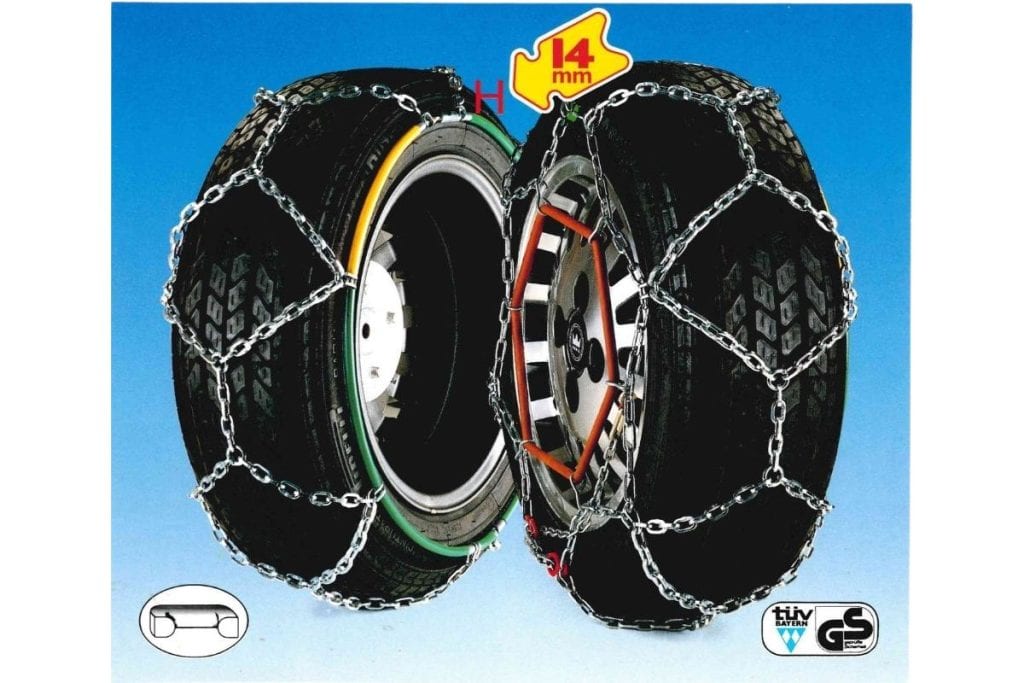
This new line of snow chains took its name from its highly flexible internal steel cable, covered with a brightly colored sheath. The chains were tensioned using a rubber ring positioned on the outside. The family included Polar System Flex, Top System Flex and Ring System Flex

During the 1980s, the automotive industry continued to grow rapidly. At König, the search for increasingly convenient solutions continued as well, and new developments followed one another in quick succession.
Another important step forward came in 1988 with the introduction of the No Problem System. It introduced a new way of fitting and pre-tensioning snow chains, using a spring positioned on the side chain that represented an early form of self-tensioning.
Compared with System Flex chains, No Problem models featured a chain locking device and a tensioning chain instead of the external elastic ring. The product design, based on a flexible internal cable covered with a polyurethane extrusion, made it possible to fit the chain without moving the vehicle. A true revolution at the time.
In addition, the various external connection points were highlighted with different colors to make installation even clearer and more intuitive.
In 1989, the No Problem System was awarded the Silver Trophy at the International Grand Prix for Technical Creation in Paris, with the following citation:
“An easy-to-fit and technically advanced snow chain, thanks to the new self-locking spring tensioning system.”
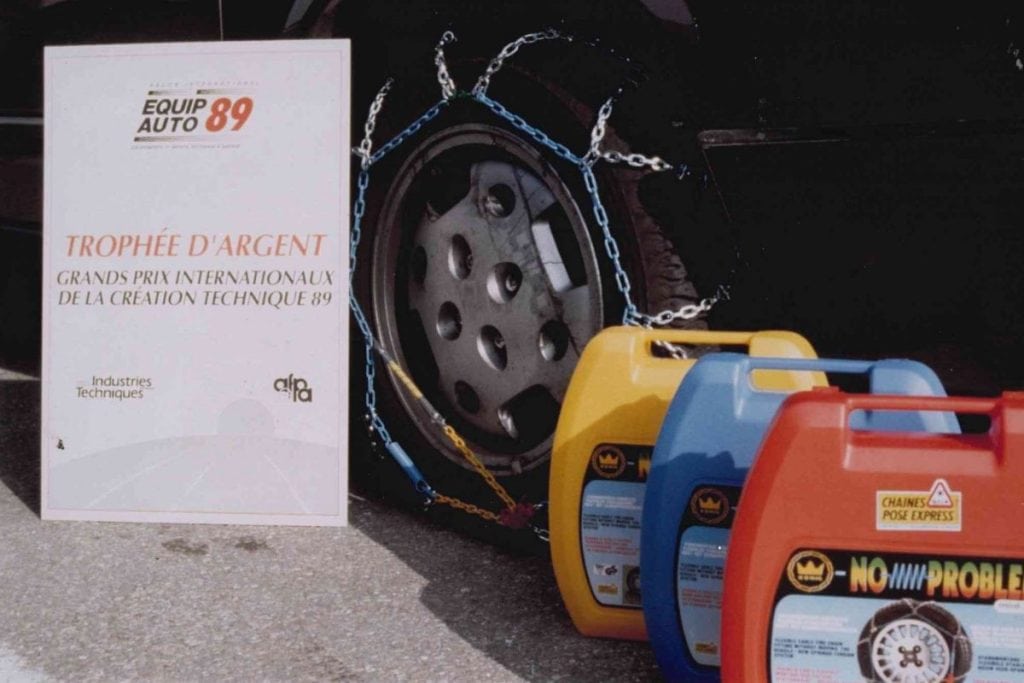
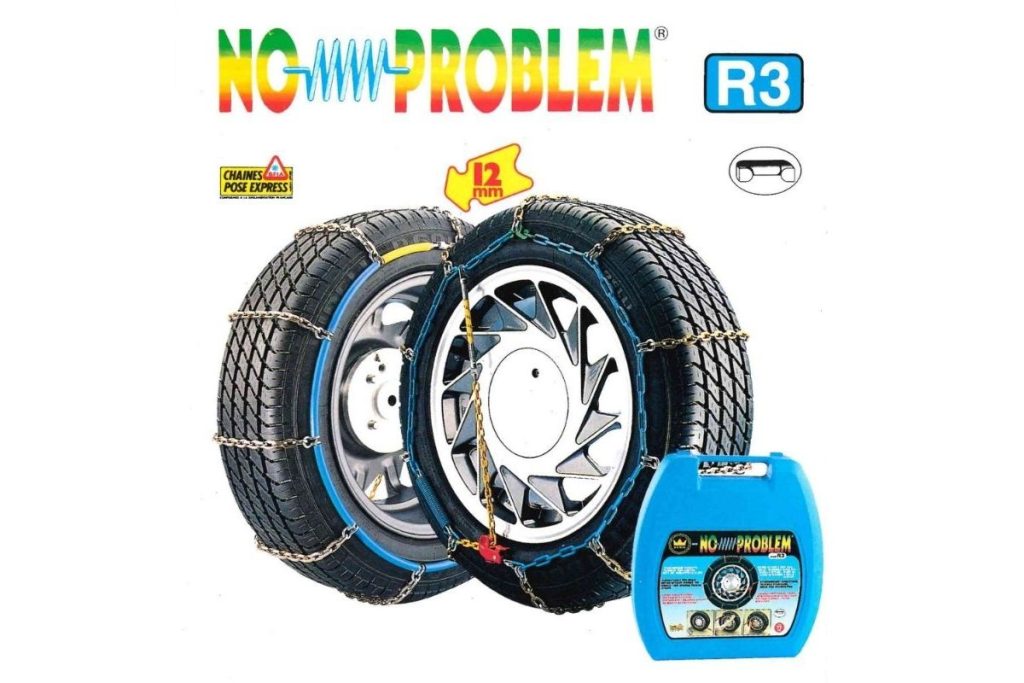
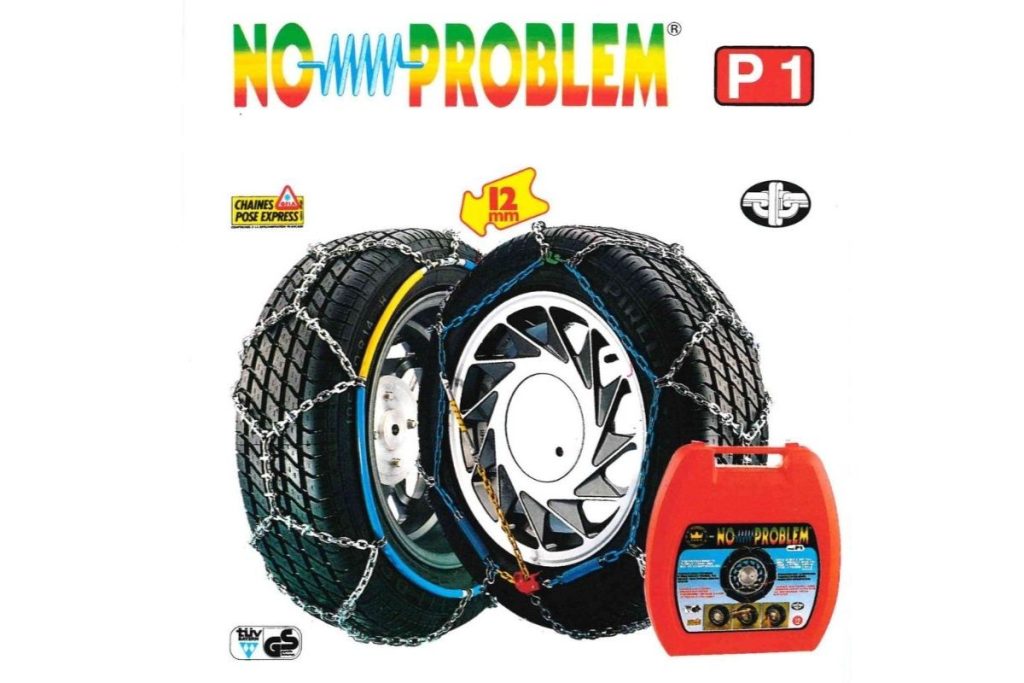
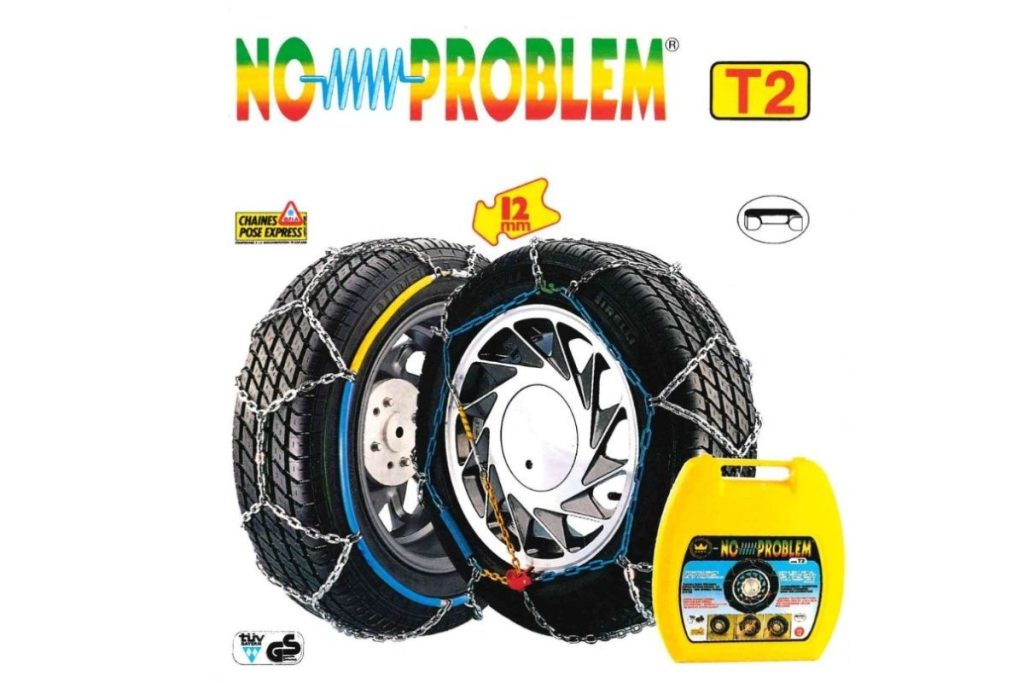
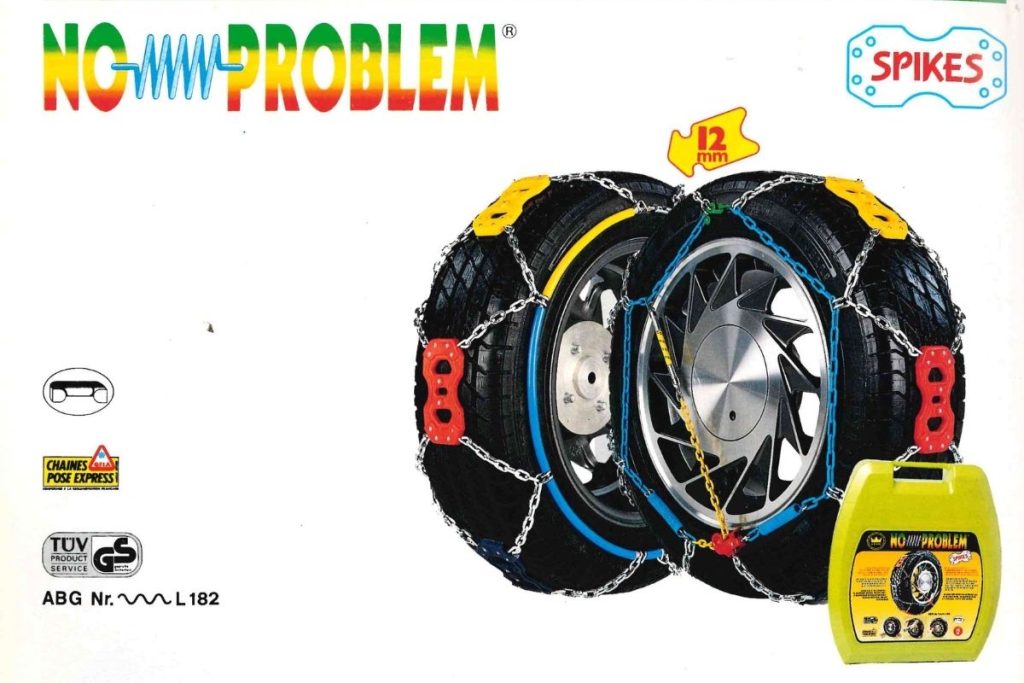
The No Problem System was used on historic König snow chain models including the No Problem P1, No Problem T2, No Problem R3, No Problem Spikes and No Problem Y.
The 1990s: new cars, increasingly thinner chains
Until then, snow chains had used 12/14 mm links. But between the 1980s and 1990s, cars began to change.
During the 1990s, Italy became the country with the second-highest number of cars on the road in Europe, behind Germany. The number of vehicles in circulation approached 30 million, almost two cars per household.
At the time, vehicle designers increasingly focused on making cars more visually appealing, introducing larger wheels and more sophisticated suspension systems. These features made vehicles incompatible with snow chains of those thicknesses.
And so, in 1998, the König No Problem Comfort was introduced: the first snow chain produced with 9 mm links.
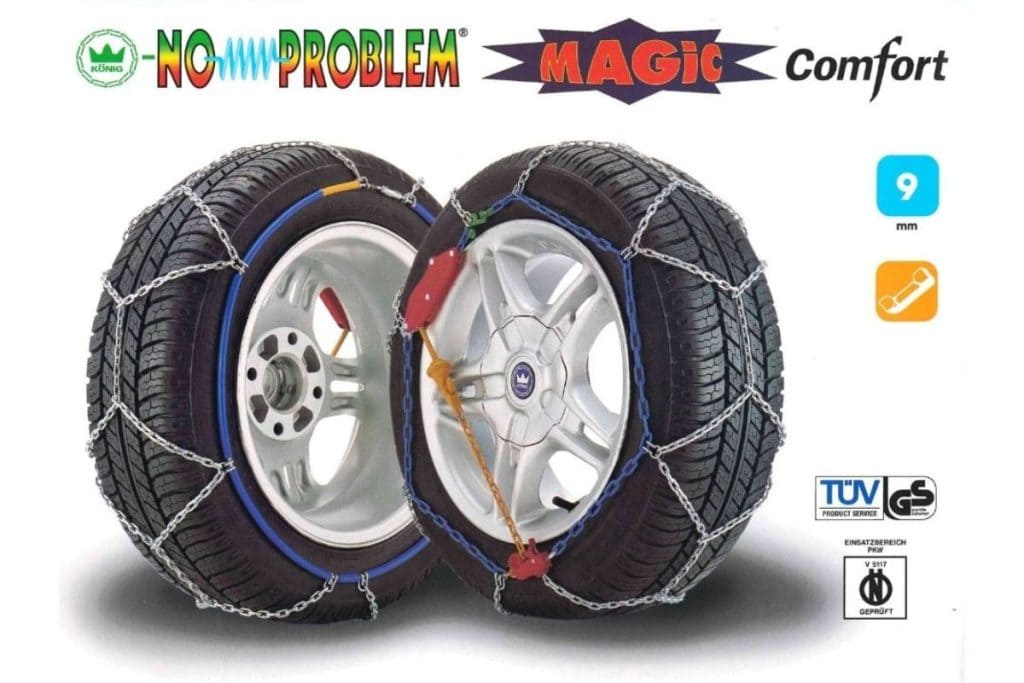
But König wanted to make the installation of its products even easier. Just a few months later, the Magic System was introduced.
This system provides automatic tensioning, allowing the chain to tighten automatically while driving and eliminating the inconvenience of having to stop for a final adjustment.
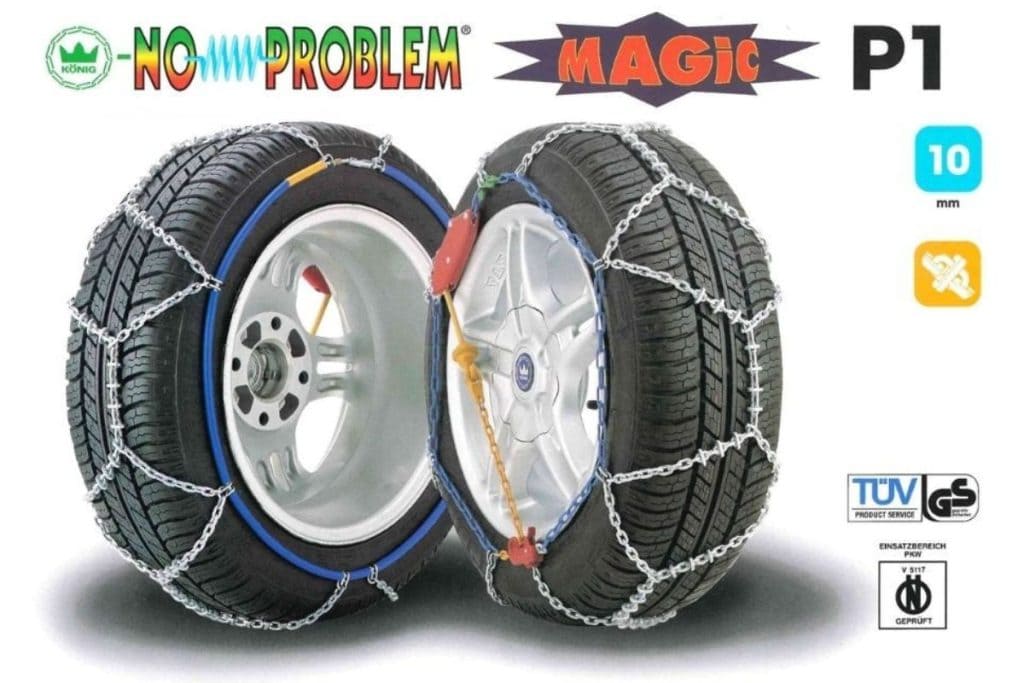
As a result, the P1, Comfort and T2 chains were also produced in a “Magic” version featuring the automatic tensioning device.
The 2000s: less space, new solutions
The pace of everyday life became increasingly fast, and everything had to be done as quickly as possible. When it came to snow chains, this meant that not only installation but also removal had to be quick.
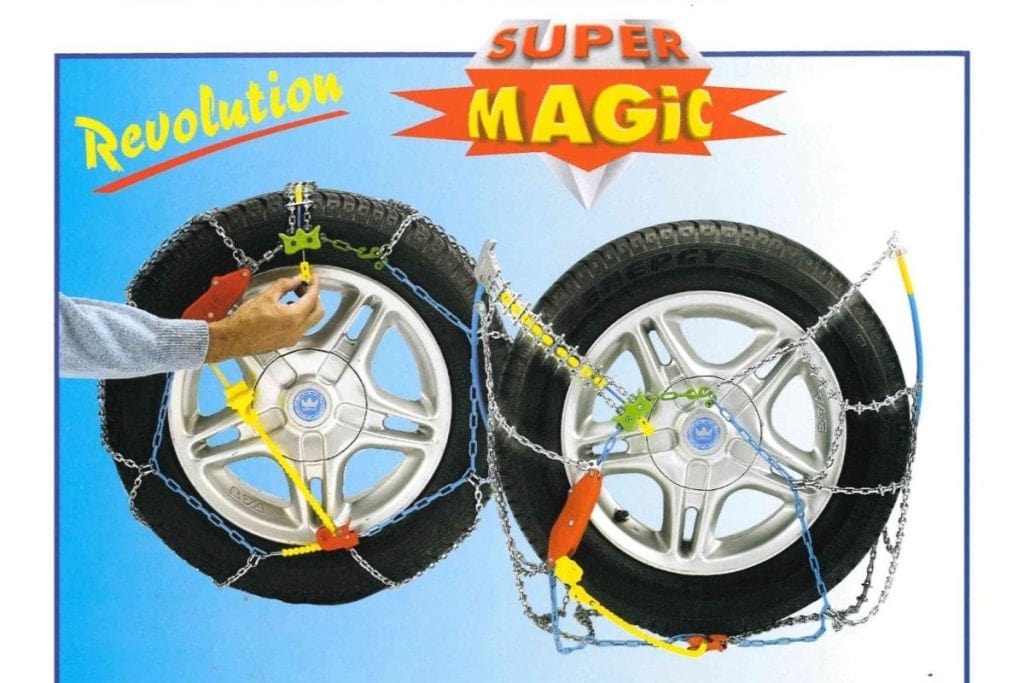
With this goal in mind, the Supermagic System was launched in 2001. Its major innovation was a new automatic release device which, by operating a specially designed external trigger, allowed the chain to drop directly to the ground, quickly and without getting dirty.
The years went by, and in 2007 the market was still dominated by small cars, which accounted for almost half of all vehicles sold. Fiat Punto/Gran Punto, Ford Fiesta, Opel Corsa, Lancia Ypsilon and Toyota Yaris were among the most popular.
At the same time, C-segment cars were becoming increasingly widespread. Models such as the Ford Focus, Volkswagen Golf, Opel Astra, Fiat Bravo and Alfa Romeo accounted for a significant share of the cars on the road.
Automotive design trends at the time focused on making these vehicles sportier and more appealing through larger wheels and braking systems, together with more advanced, higher-performance suspension systems. All of this led to a significant reduction in the clearance available inside the wheel arch for fitting traditional snow chains.
This became König’s new challenge. The company responded by launching a specially designed snow chain with links just 7 mm thick, a size never produced before: the König K7. Over the years, the product was renamed first König CK-7 and later became today’s König K-Slim. It stands apart from other models precisely because of its reduced link thickness and extremely limited dynamic clearance.
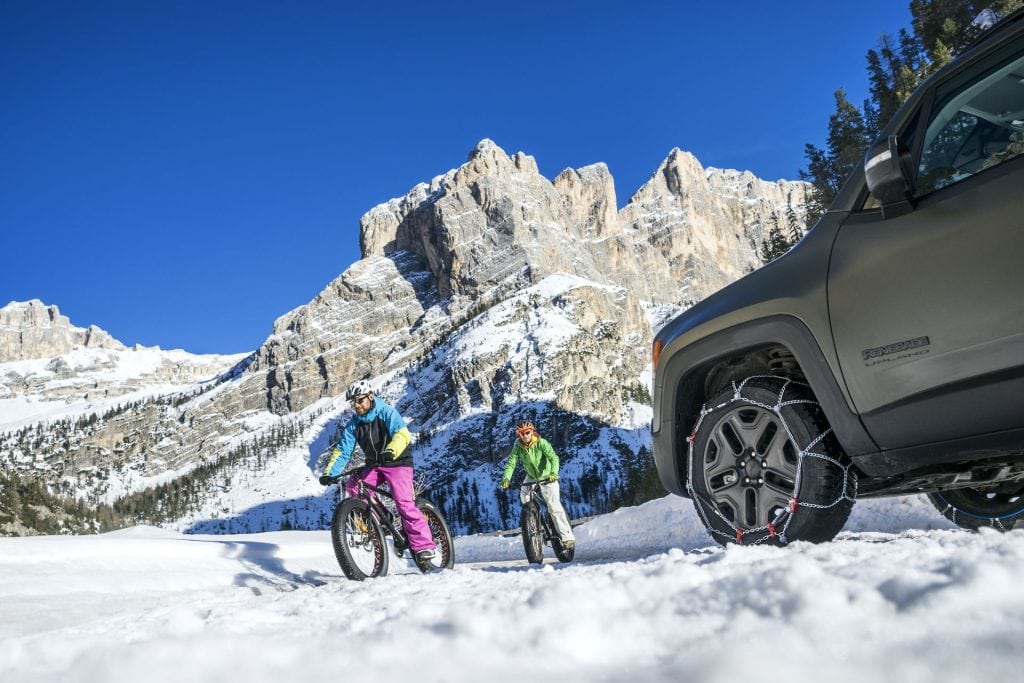
The König K7 solved the problems associated with limited wheelhouse clearance, but not those of cars that could not accommodate chains with components on the inner side of the wheel.
A purpose-built solution was therefore needed.
The König K-Summit external snow chain was introduced, paving the way for König’s family of external snow chains. The range has expanded over the years with the introduction of the K-Summit XL for crossovers and small SUVs in 2009, the K-Summit XXL for large SUVs in 2011, the K-Summit VAN for commercial vehicles in 2016 and the K-Summit MAX for electric vehicles in 2022.
The common feature shared by the chains in this family is their installation system (in this article, we have summarised the main features and differences between the chains in the K-Summit family).
The 2010s: the SUV boom
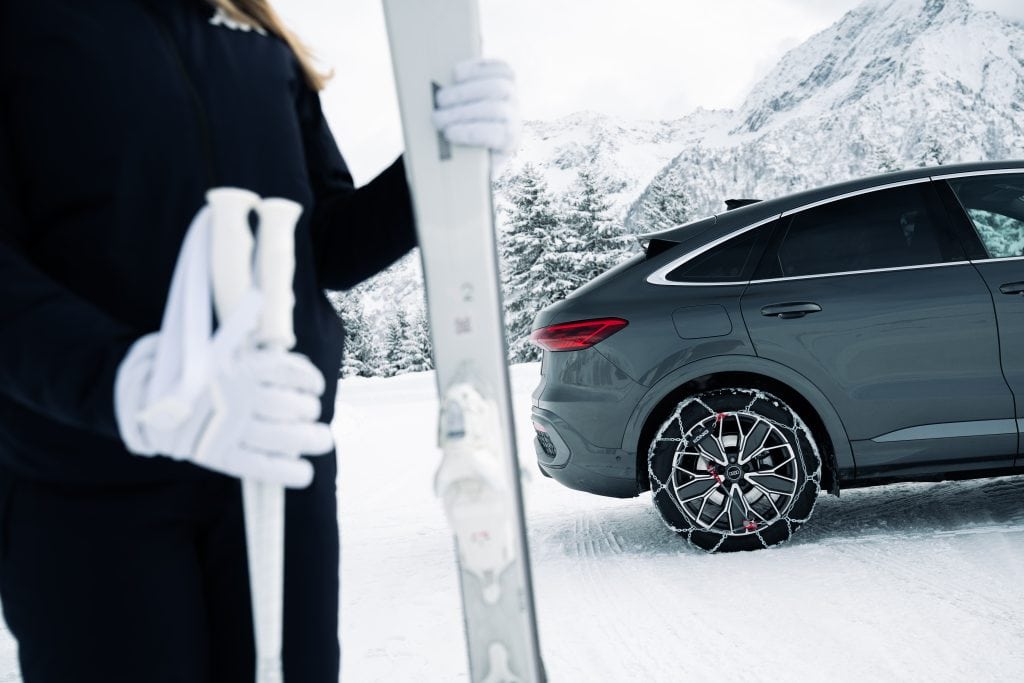
Trends change quickly, and with the beginning of the 2010s, SUVs became increasingly common on the roads. These vehicles required snow chains specifically designed in terms of both link thickness and strength.
The solution? König XG-12 Pro.
Thanks to dedicated technical solutions that took the performance and strength of a 12 mm chain to a level never achieved before, this chain obtained dual approval for both light vehicles (V5117) and heavy vehicles (V5119).
Traditional passenger cars did not disappear, however. Quite the opposite. And people were asking for solutions that were faster and increasingly intuitive.
The year 2011 marked another step forward in the world of snow chains.
Have you ever tensioned a snow chain with your foot? From that moment on, it became possible with the introduction of the König Easy-fit CU-9.
The significance of this innovation was recognised as early as 2011, when the Easy-fit CU-9 won the Gold Award at the International Grands Prix for Automotive Innovation at Equip Auto in Paris, followed by the iF Design Award in 2013.
That same year, the Easy-fit CU-9 also earned a Guinness World Record, with an installation time of just 12 seconds, demonstrating its intuitive design and ease of installation.
The technology was then extended to SUVs with the launch of the König Easy-fit SUV.
The 2020s: new generations of snow chains
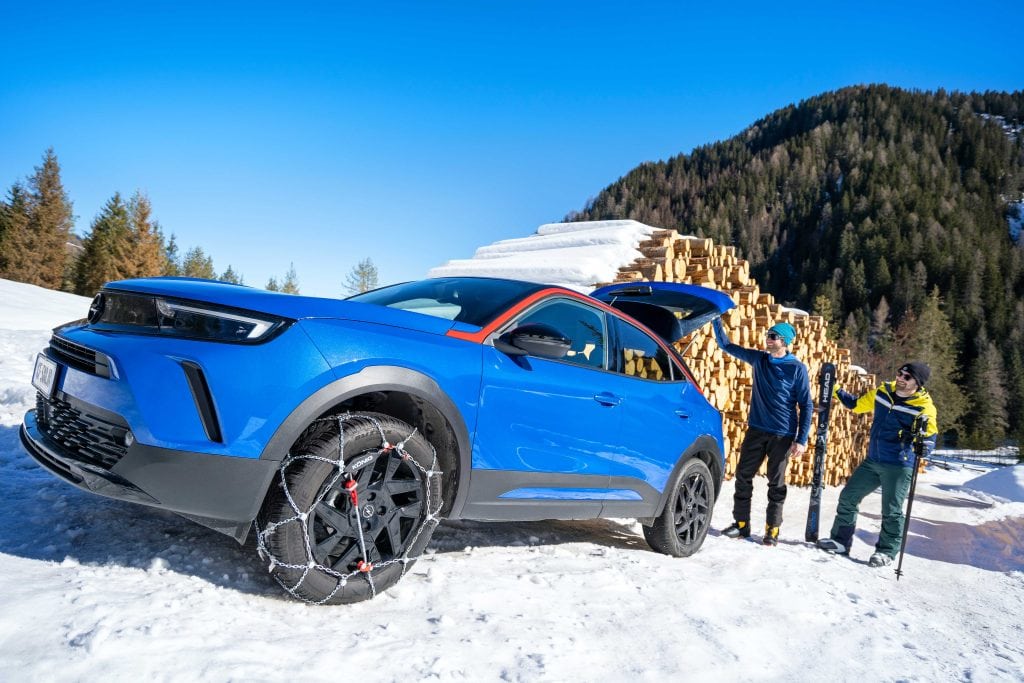
Since the beginning of the 2020s, the number of crossovers on the roads has continued to grow, both in Italy and across Europe. Compact SUVs that are agile and relatively small, yet comfortable and spacious.
Ford Puma, Renault Captur, Volkswagen T-Roc and T-Cross, Peugeot 2008: these are just some of the most common models on the road.
Once again, these vehicles require purpose-built solutions. This led to the development of the König XG Cross.
Building on the tread design of the König XG-12 Pro, the XG Cross features a tread with triple welded bars, designed to improve grip and performance on snow and ice.
But 2022 was the turning point, when König launched a product that completely transformed the concept of the snow chain.
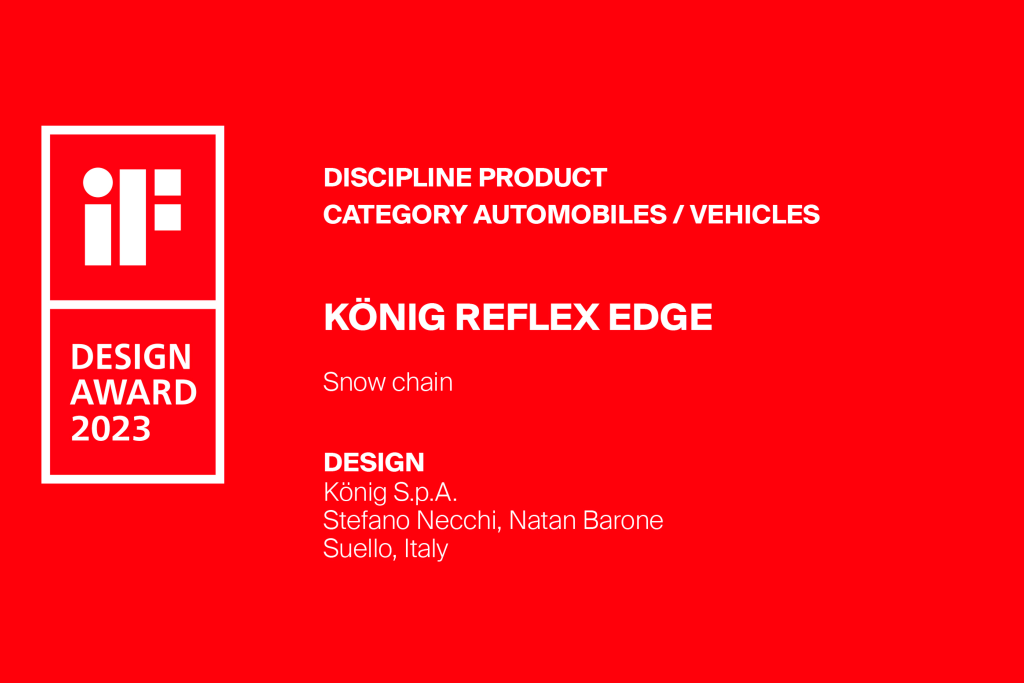
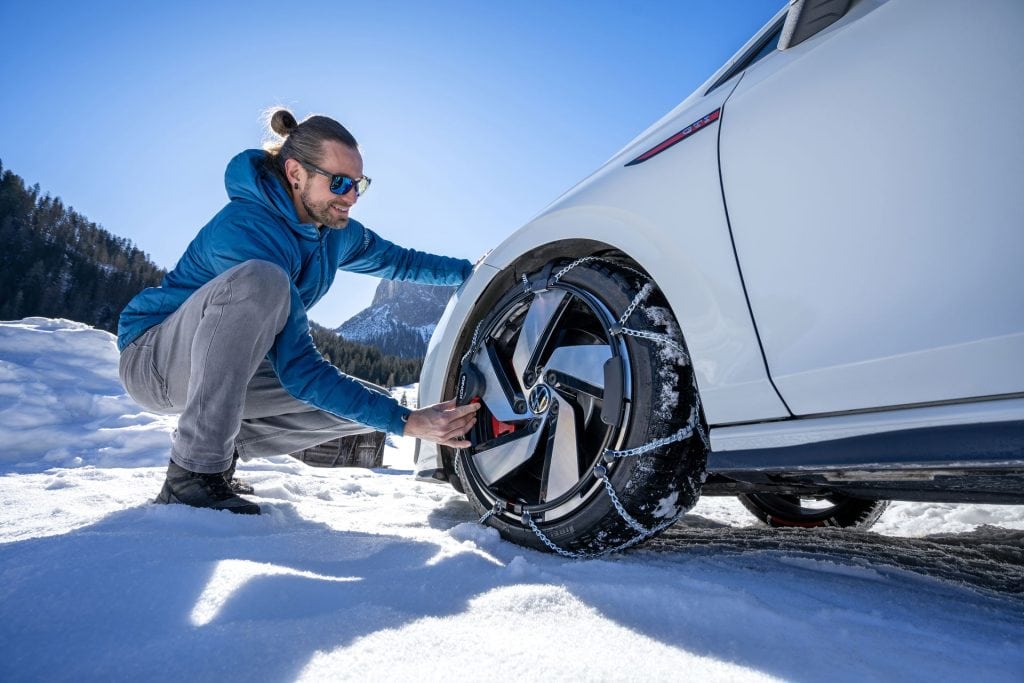
Cutting-edge design and an intuitive, revolutionary installation system: these are the key concepts behind the new König Reflex Edge, winner of the iF Design Award in the same year.
The heart of the innovation lies in the way this chain was designed. At the center of its design is the Reflex Tensioning Box, an automatic tensioning device integrated into the chain itself for the first time and activated with a simple click.
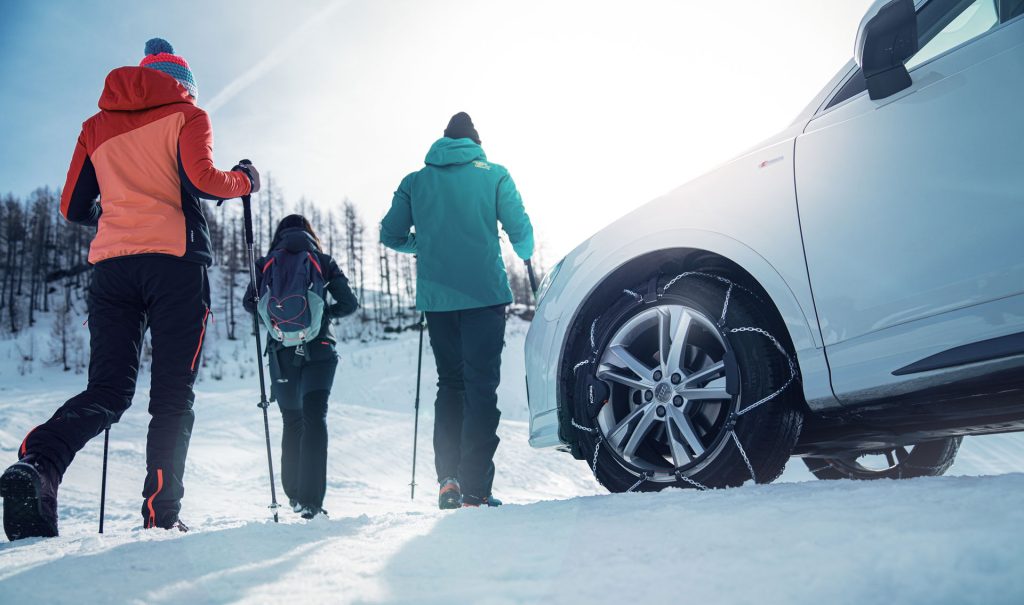
An innovation like this naturally had to be adapted to the increasingly popular crossover segment. And so, in 2023, the family expanded with the introduction of the König Reflex Cross. This chain incorporates the installation system of the Reflex Edge and the tread construction of the XG Cross.
Over sixty years, cars, roads and the way we travel have changed. Drivers’ needs have changed too, and snow chains have evolved with them. Every innovation has sought to respond to a new requirement: improving performance, ensuring vehicle compatibility and making installation increasingly simple and intuitive.
The König story told here is built on exactly this: observing how mobility changes and developing new solutions to face winter conditions.